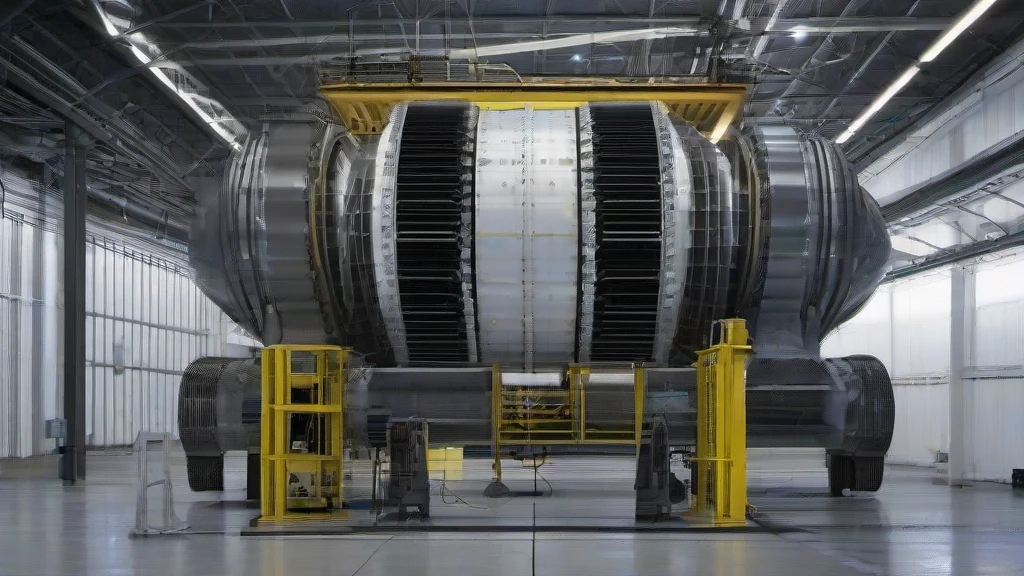
The rapid expansion of artificial intelligence is increasing pressure on the electricity supply needed to run data centers. With grid connections and power equipment facing long waits, some developers are looking at an unusual option: turbines adapted from aircraft-engine technology to generate electricity on the ground.
ProEnergy’s PE6000 is built around a refurbished General Electric CF6-80C2 engine core, a model used in aircraft including the Boeing 747. The core is combined with components and systems for power generation. The turbine compresses air, mixes it with fuel and uses the resulting combustion gases to drive a generator.
The International Energy Agency says grid-connection queues and equipment shortages could put around 20% of planned data center projects at risk of delays. In advanced economies, building new electricity transmission lines can take four to eight years, while new gas turbines also face delivery waits of several years. On-site generation offers companies a way to reduce their dependence on those timelines.
In April 2026, ProEnergy announced an agreement to supply Crusoe with 13 PE6000 generator sets for future large-scale data center projects. Each unit is rated at 50 MW, for a combined capacity of 650 MW, with deliveries scheduled through the summer of 2027. The announcement named several projects as destinations but did not assign all the units to one facility.
ProEnergy lists the PE6000’s gross output as 50.2 MW and says it can start in five minutes. That figure refers to the machine starting up, not the time required to permit, build and install a power plant.
Reusing aircraft-engine components does not remove the emissions associated with generating electricity from natural gas, a fossil fuel. The IEA expects renewables to provide close to half of the growth in electricity supply to data centers through 2030, while natural gas and coal together are expected to meet more than 40% of additional demand.
In its central scenario published in 2025, the IEA projected that global data center electricity consumption would rise from 415 TWh in 2024 to around 945 TWh in 2030, with AI identified as the main driver of the increase.
Sources: Pplware.