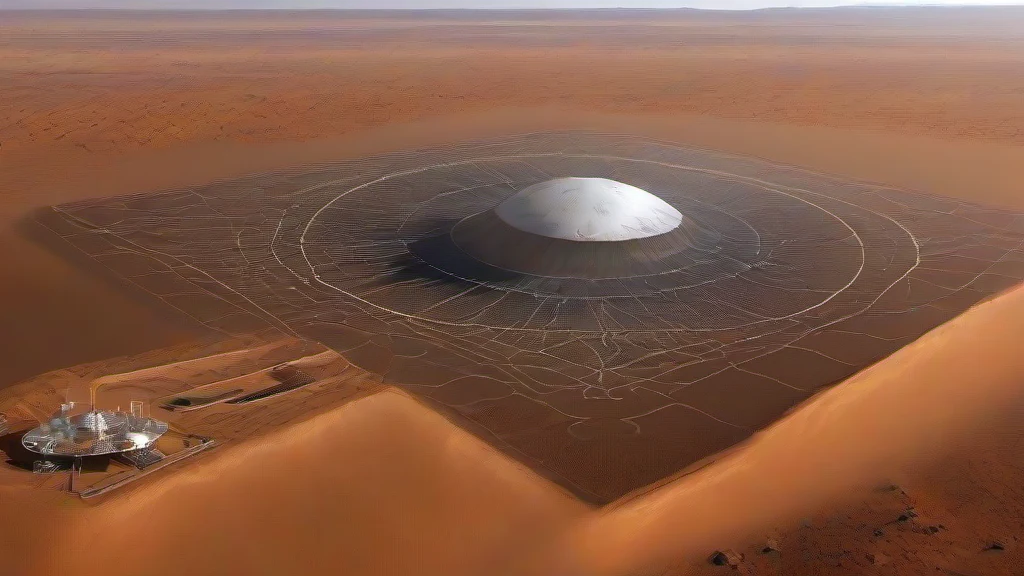
Data from the European Space Agency’s ExoMars Trace Gas Orbiter (TGO) have revealed an unusual pattern of hydrogen chloride in the Martian atmosphere. The gas was detected above fissures on the flanks of Alba Mons, raising the possibility that heat beneath the surface is allowing compounds from inside the planet to escape.
Hydrogen chloride has been observed on Mars before, but the newly analyzed readings differed from earlier variations associated with atmospheric dust and water cycles. The latest peaks appeared at the start of northern summer and were concentrated over the same area. Images also showed narrow fissures, some hundreds of meters long, alongside changes in surface color.
Researchers suggest the cracks could provide a route for underground gases to reach the atmosphere, potentially from a dormant magma chamber. Seasonal changes may help explain the pattern: winter temperatures in the region can fall to around -120°C, where ice could block the fissures. In summer, ice sublimation could reopen the passages and allow gases to escape.
The findings do not indicate that an eruption is imminent, and no recent volcanic activity has been directly observed on Mars. The proposed underground source remains a hypothesis requiring further observations and analysis.
If confirmed, a source of geological heat beneath Alba Mons could make nearby underground regions of interest in the search for microbial life. Heat interacting with water and rock might create warm, wet environments, but the study found no organisms or direct evidence of biological activity. The research was published on Wednesday in Science Advances.
Sources: Olhar Digital.