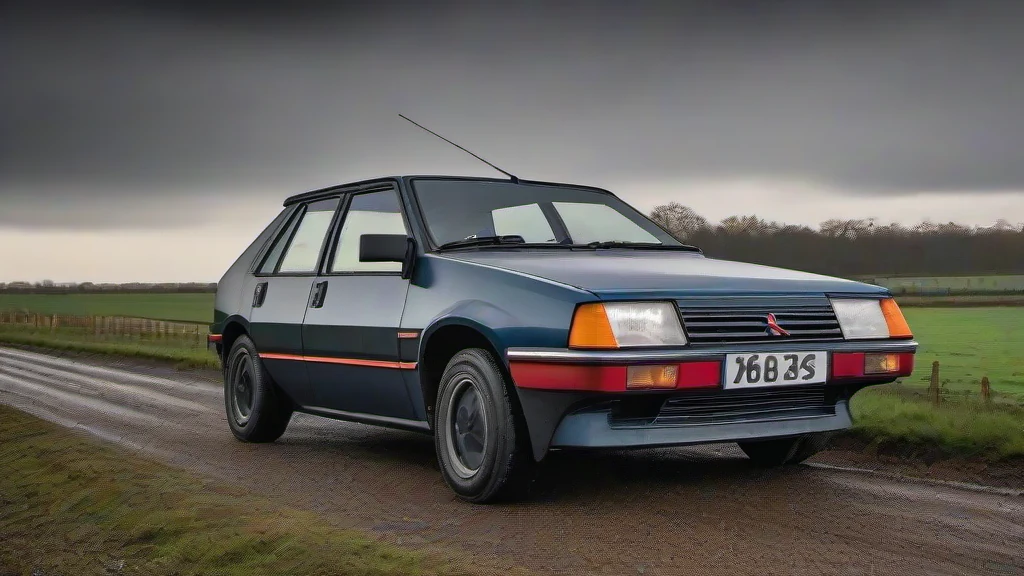
In October 1983, John Watkins, an engineer with the Royal Air Force, played a key role in helping the Thrust 2 team set a new land speed record. That same month, he purchased a Citroën BX 16RS, a sporty version of the iconic French hatchback. Five years later, in 1988, Watkins parked the vehicle in a barn in Lincolnshire, England, where it remained until its discovery this year. The car now requires significant work to be revived.
Watkins was responsible for the Rolls-Royce Avon engine on the Thrust 2 project. According to his wife, Veronica, who appeared on an episode of The Late Brake Show, he was selected for the position due to his prior experience with similar engines in RAF Lightning fighter jets. On October 4, 1983, Richard Noble drove the Thrust 2 across the Black Rock Desert in Nevada, reaching a peak speed of 650.88 mph (approximately 1,047 km/h) during its fastest run.
The vehicle in question is Watkins' personal 1983 Citroën BX 16RS, a basic 1.6-liter model producing 92 horsepower. Weighing around 940 kg, it could accelerate from 0 to 100 km/h in approximately 13.5 seconds. Watkins' daughter told Smith that her father bought another car and stored the BX intending to make minor repairs before giving it to his younger sister once she passed her driving test. However, the car never left the barn.
Smith found evidence suggesting Watkins intended to work on the vehicle, including a spare wheel and new brake calipers. Watkins passed away at the end of 2024, and it was only after his death that the family decided to inspect the property. The last time taxes were paid for the car was in 1988, when it had covered approximately 47,000 miles (75,600 km), averaging about 16,000 km per year.
The team aimed to get the car running but encountered several obstacles, including thick dust, unexpected rust, and damage caused by mice both inside and under the hood. The air filter was missing, and one of the front wheels was seized. Suspecting that roof leaks in the barn contributed to the corrosion, the team improvised a spare wheel and towed the vehicle out using an old electrical cable left behind by Watkins.
Despite being stationary for decades in less-than-ideal conditions, the car remained remarkably complete. The bodywork is straight, the windows are intact, and the dashboard with its original instruments is still in place. Notably, Citroën's hydropneumatic suspension system, which uses nitrogen spheres and hydraulic fluid instead of conventional springs, was also found intact. A vintage sticker on the rear window reading "The BX loves driving, hates garages," a slogan from the car's launch campaign, was also discovered.
Citroën produced over 2.3 million BX units between 1982 and 1994, but most are no longer in existence. Smith estimates that only about 200 remain on British roads. Pre-restyling models like this one are even rarer, with the basic 16RS version being one of the scarcest variants.
During an attempt to revive the engine, a specialist checked the timing and spark plugs, managing to turn the motor over. However, a dead battery and a poor connection at the terminal prevented the starter from engaging fully. The specialist noted that with more time and proper terminals, starting the engine should not be a problem.
At the time of the video's publication, the car was listed for sale to anyone willing to undertake its restoration. Veronica hopes to see it running again, while Watkins' daughter expects a new owner to bring the vehicle back to life.
Sources: Xataka.